The Loneliness of Being Early
On talent, time, and always being the youngest in the room
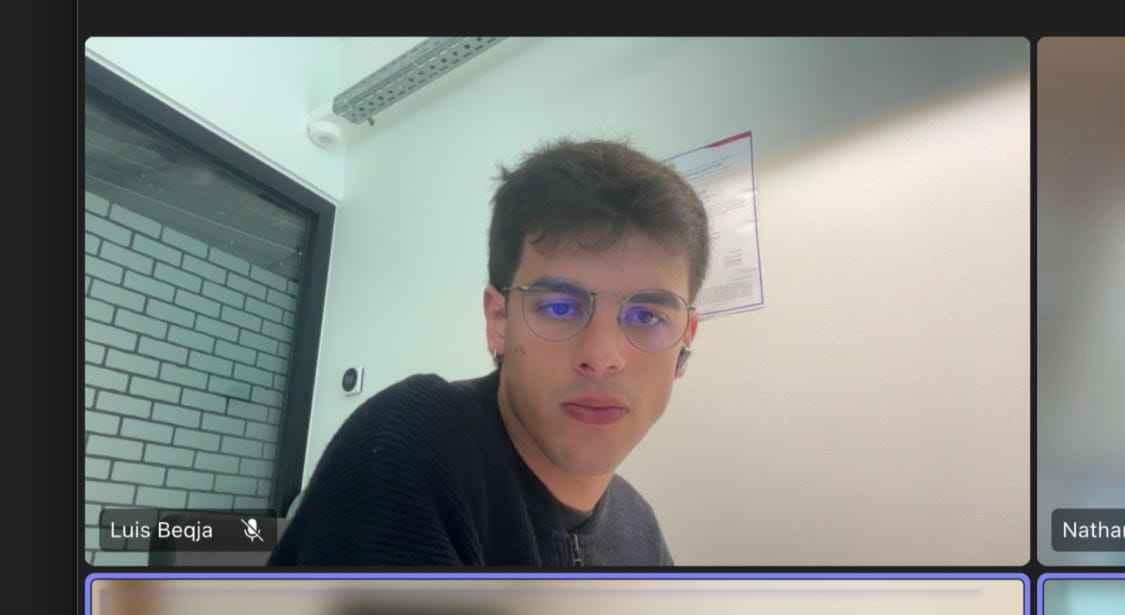
I am 23 years old.
I know — and I owe an apology to anyone I may have misled about my age over the years. It happened more often than I like to admit. Not out of malice, but convenience. Saying I was older usually made conversations easier, expectations clearer, and rooms less awkward.
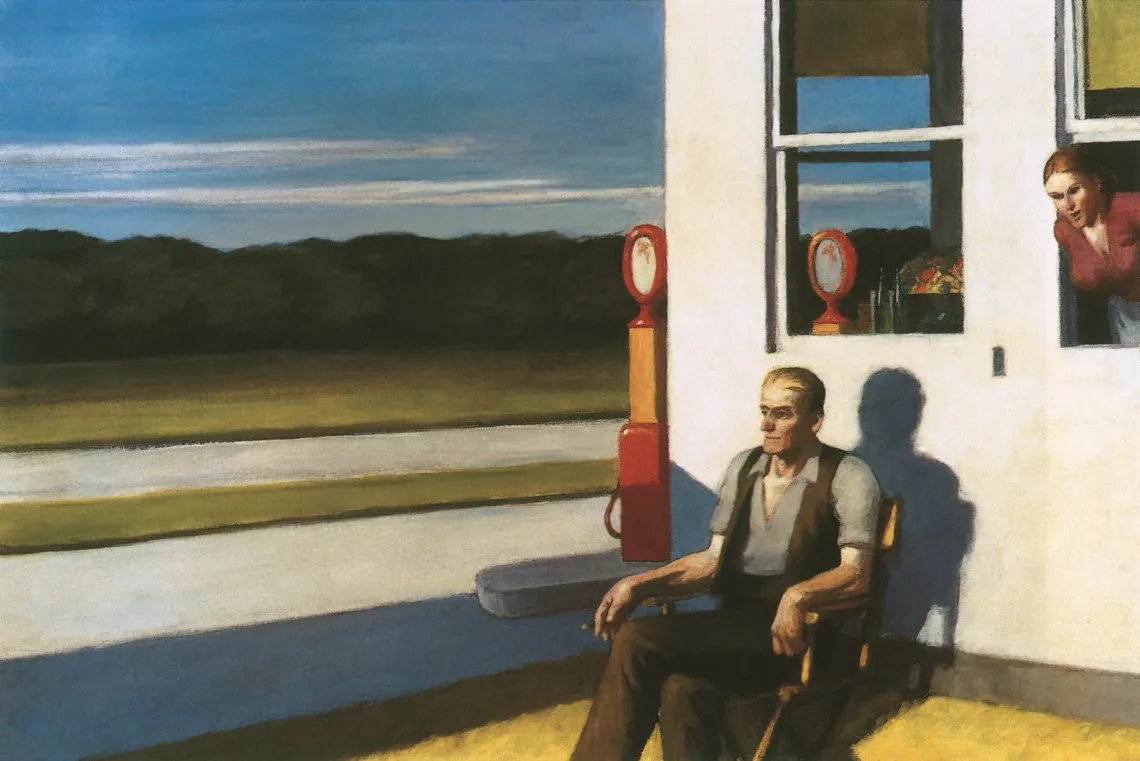
As long as I can remember, I have often been the youngest person in the room.
The youngest at work.
The youngest in my group of friends.
The youngest in my relationships.
I was born in 2002, the pattern started earlier than I realized.
The first place where it became visible was football. Between the ages of fourteen and seventeen, I was almost always playing with the older team — usually two years ahead of my age group. At the time, it didn't feel strange. Being allowed to play with older players felt like recognition. I was proud of it. It meant I was good enough to be there.
Back then, I didn't question what it meant to constantly measure myself against people who were already further along — physically, mentally, emotionally. I was simply happy to belong.
Only later did I realize that something subtle was happening. Playing with older teammates slowly changed my relationship with competition. I stopped feeling dominant, stopped feeling like I was growing through comparison. At some point, without a dramatic reason, I quit. Looking back, I think part of me lost the sense of progress — and without progress, motivation disappeared. It feels like a mistake now, but at the time, it felt almost natural.
That early dynamic didn't stop there. It evolved.
The real break came with work. I started working as a software developer at seventeen, before I had even finished high school. From that moment on, the pattern became permanent. For five years — across different companies — I have always been the youngest person in the room. Even now, at twenty-three, I still am.
What changed with work was awareness. Being the youngest was no longer a temporary situation or a quiet point of pride. It became a defining feature of how I was seen, how I moved, and how I learned to exist inside professional spaces. And with that came questions I didn't yet have the language to ask.
Work is where being early stopped being a private feeling and became a public fact.
My age was no longer something I quietly carried with me. It was something others noticed, named, and repeated. "You're the youngest in the company." "The youngest in the project." "I think you're the youngest person I've ever worked with."
At first, I embraced it. I wore it almost proudly. I said it out loud myself, as if repeating it could turn it into proof: if I was here this young, then I must be worth something. Being the youngest became a shortcut for validation, a way to justify my presence among people with ten years more experience.
But that same label carried another effect. The more it was repeated, the more visible I felt — not for my work, but for my age. I was constantly aware of the comparison I had not chosen: me, at the beginning; them, already formed.
That's where the doubt started. A quiet voice asking whether I was actually good enough, or simply early enough. Whether I belonged there, or whether I was temporarily tolerated. Competing daily with people who had a decade of experience made every achievement feel provisional, and every mistake feel confirmatory.
Pride and impostor syndrome began to coexist. One told me I was exceptional for my age. The other told me I was lying to myself. And being the youngest meant both were always present, impossible to separate.
Over time, that doubt started to change shape.
Being the youngest once could be a coincidence. Being the youngest twice could still be a mistake. But when it keeps happening — across different companies, different teams, different contexts — it becomes harder to dismiss entirely.
After my first job, I told myself it might have been luck. After the second, I started paying attention. After spending three years in the same company with solid results, something shifted: maybe I did know something about what I was doing.
Changing company didn't reset the pattern. I was still the youngest in the room. But this time, the responsibilities increased. I was given ownership, expected to make decisions, trusted with parts of the project that mattered. Seeing myself operate in that space — and seeing it work — slowly replaced impostor syndrome with something quieter and more stable: confidence built on repetition.
I've never felt comfortable calling myself "talented." I don't think that's the right word. What I recognize instead is passion — finding something early and caring about it deeply enough to stay with it. That, combined with time and exposure, starts to look like talent from the outside.
At some point, being the youngest stopped feeling like a threat and started functioning as a kind of shield. In meetings with people far more experienced than me, I realized I had nothing to lose. If I said something wrong, I was the youngest — that was the explanation. That freedom made me more willing to speak, to question, to take space.
And that's when I understood that age, in those rooms, was not just a number. It was a position — one you could either shrink under, or learn to use.
There's a poet who understood this better than most.
Arthur Rimbaud wrote all of his poetry before the age of twenty-one. Then he stopped — completely, permanently. He never wrote another poem. By nineteen, he had already abandoned the craft that would make him immortal.
At sixteen, he sent a manifesto to the established poets of Paris, declaring how poetry should be written. Victor Hugo called him "Shakespeare enfant" — Shakespeare as a child. One critic described him as "a meteor, lit by no other reason than his presence, arising alone then vanishing."
His most famous line was "Je est un autre" — "I is another." The grammar is deliberately wrong. The verb doesn't agree with the subject. Scholars have spent a century trying to decode it, but I think the meaning is simpler than it seems: when you exist out of sync with your own time, you stop recognizing yourself. You become a stranger to your own reflection.
Being early doesn't just change how others see you. It changes how you see yourself. You start performing a version of you that fits the room — older, more composed, more certain. And somewhere along the way, the distance between who you are and who you present becomes harder to measure.
Rimbaud burned through poetry like someone running out of time. Then he walked away and became a merchant in Africa, as if the whole thing had been a fever dream. No one fully understands why. Maybe he said everything he needed to say. Or maybe he got tired of being the youngest genius in every room he entered.
I don't know if I'm talented. But I know what it feels like to arrive somewhere before you were expected — and to spend years wondering if you belong there, or if you're just early.
When I moved abroad — I was around nineteen or twenty — my social world naturally formed around work. Most of my friends were colleagues, and almost all of them were older than me. Not slightly older, but often in a completely different phase of life: late twenties, early thirties, sometimes even mid-thirties.
At first, I never felt the distance. I never felt too young to be there, too inexperienced to speak, or out of place in conversations. Age didn't feel relevant. I felt at home in those rooms, and for a long time, that felt like confirmation that I belonged.
But over time, something changed.
Disagreements started to sound different. When tensions arose, when opinions diverged, when conflicts appeared — my age began to enter the conversation. Subtly at first. "It's normal, you're still young." Then more explicitly. As if age itself could explain, soften, or invalidate a position.
What struck me was not disagreement — disagreement is healthy. It was the way age became a shortcut. A way to avoid engaging with what I was actually saying. My thoughts were no longer something to confront; they were something to contextualize away.
I never believed that experience automatically makes a thought right or wrong. Experience shapes perspective, yes — but perspective deserves to be examined on its own terms. You can disagree with what I think. You can challenge my reasoning. But reducing an idea to the age of the person who holds it felt like being quietly pushed out of the room.
That's when the sense of not belonging began to surface.
With older friends, I was sometimes reminded — implicitly or explicitly — that I was "not there yet." With people my own age, I often felt out of sync. Spending so much time with older people had shaped the way I saw the world, the things I cared about, the questions I asked. I no longer fully recognized myself in either space.
I wasn't too young to understand, and not old enough to be taken seriously. Caught between rooms, belonging to neither.
Rimbaud once wrote: "Idle youth, enslaved to everything; through sensitivity I wasted my life."
I don't think I've wasted anything. But I understand the weight of those words — the exhaustion of being seen as potential instead of presence, as someone becoming rather than someone who already is.
A long time ago, someone said something I never forgot
"You are very lucky to have what you have and being where you are."
She knew me well — probably better than most. And yet those words have stayed with me, not as comfort, but as a quiet reminder of the distance between how this looks from the outside and how it feels from the inside.
I don't feel lucky.
I don't feel lucky to have lived a life shaped by pressure and expectation. I don't feel lucky to have spent years proving I belonged in rooms where my presence was always slightly surprising. I don't feel lucky to have measured myself, again and again, against people who had a decade head start — and to have internalized that comparison so deeply that I still carry it with me.
What I feel is something harder to name. Not resentment. Not regret. Just the strange awareness that even the people who know you best can look at your life and see something completely different from what you experience.
From the outside, being the young talent looks like an advantage. A gift. A shortcut.
From the inside, it's a weight you learn to carry — quietly, constantly — until you forget it's even there.
Being early is not a tragedy. It's not even a complaint. It's just a particular kind of loneliness that's hard to name until you've lived it long enough to recognize the shape.
You arrive before you're expected. You learn to perform competence before you fully feel it. You build friendships across invisible lines that only become visible when someone draws them. And through it all, you carry a quiet question that never fully goes away: Am I here because I earned it, or because I got lucky with timing?
I don't have an answer. Maybe the question is the point.
What I do know is this: the rooms will keep changing, but the pattern probably won't. I'll keep being early — to jobs, to conversations, to phases of life. And maybe one day, the gap will close. Or maybe I'll just get better at living inside it.
Until then, I'll keep showing up. Youngest in the room. Still learning what that means.